

It’s persimmon harvest season
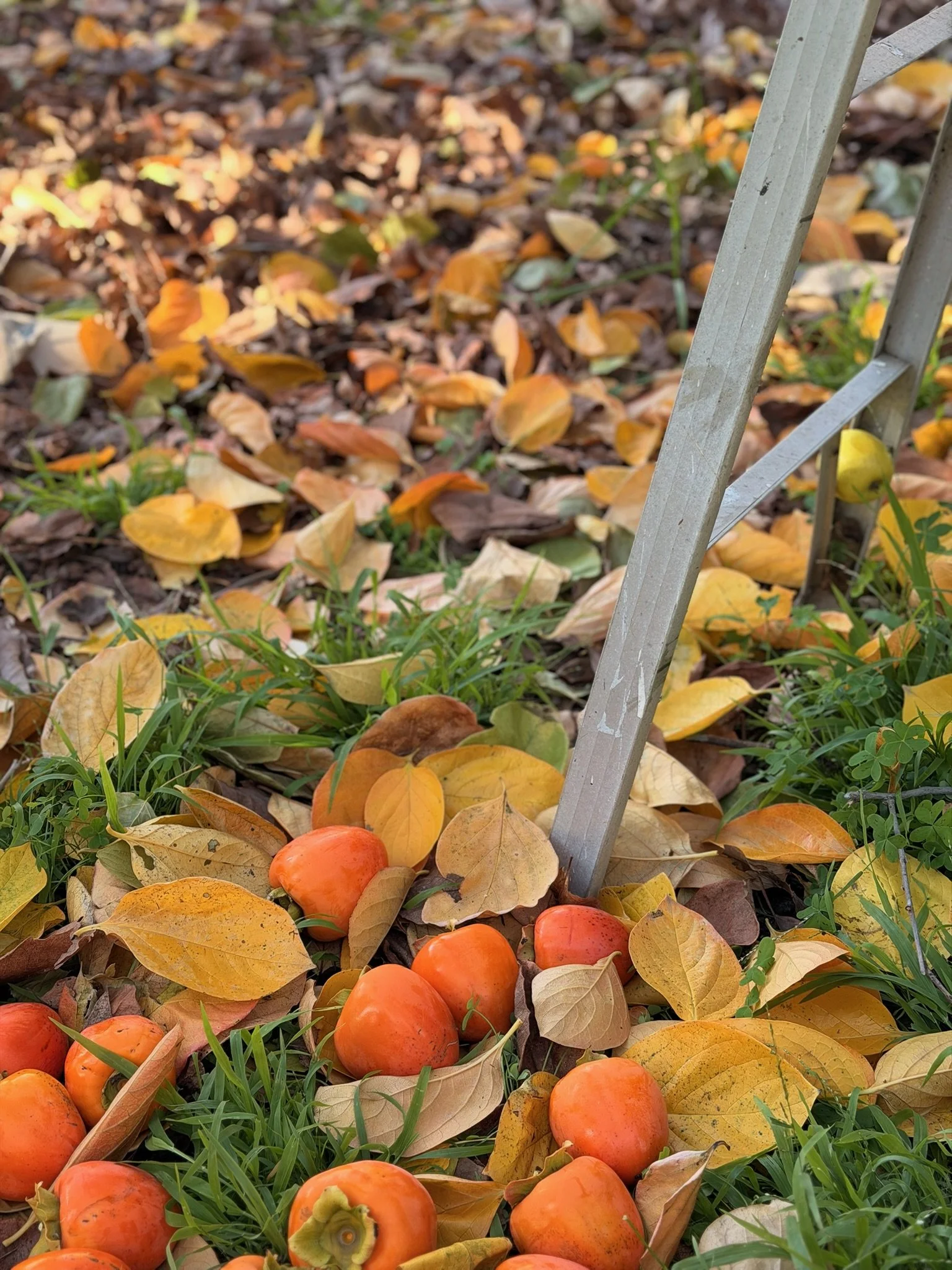
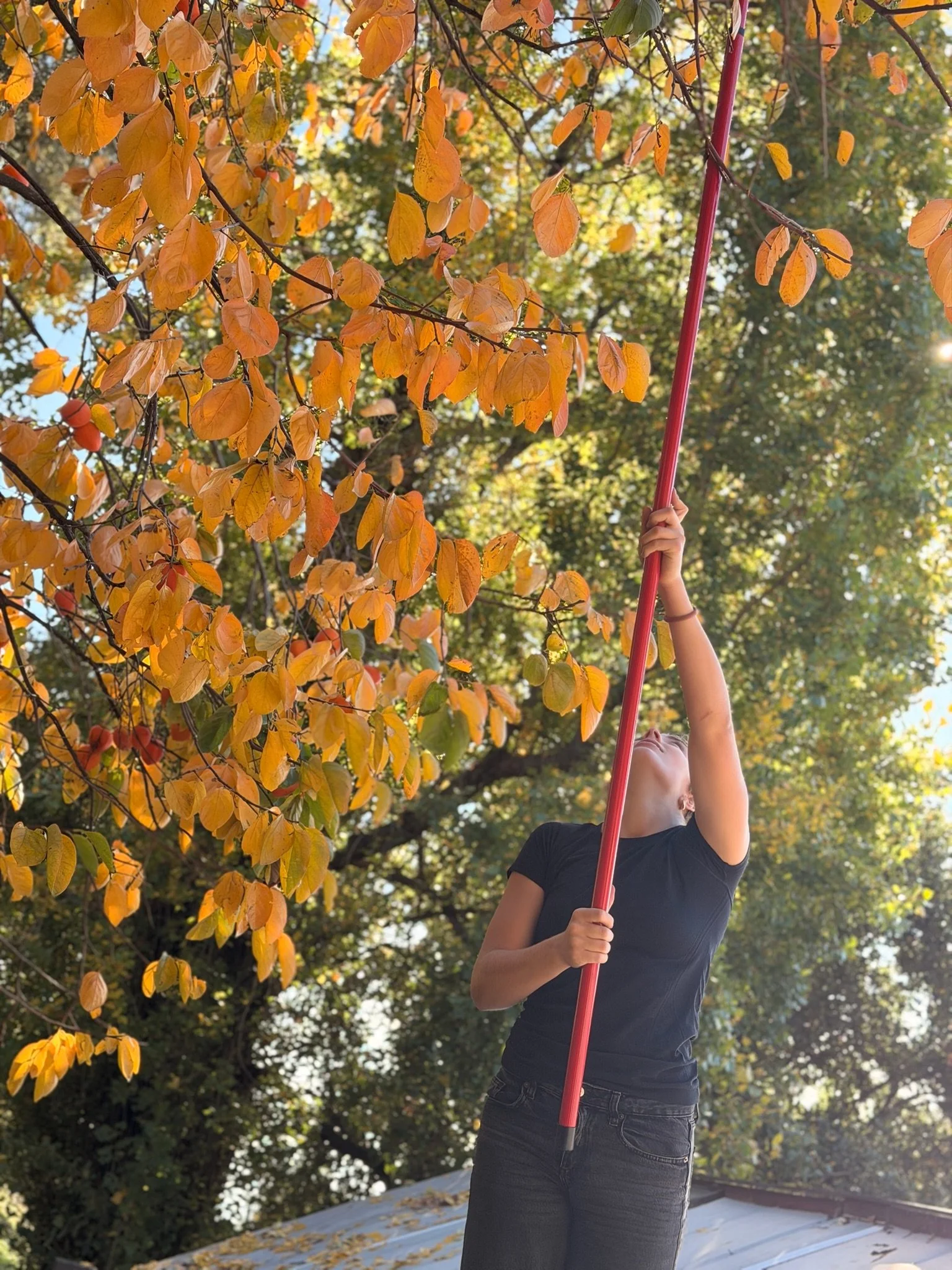
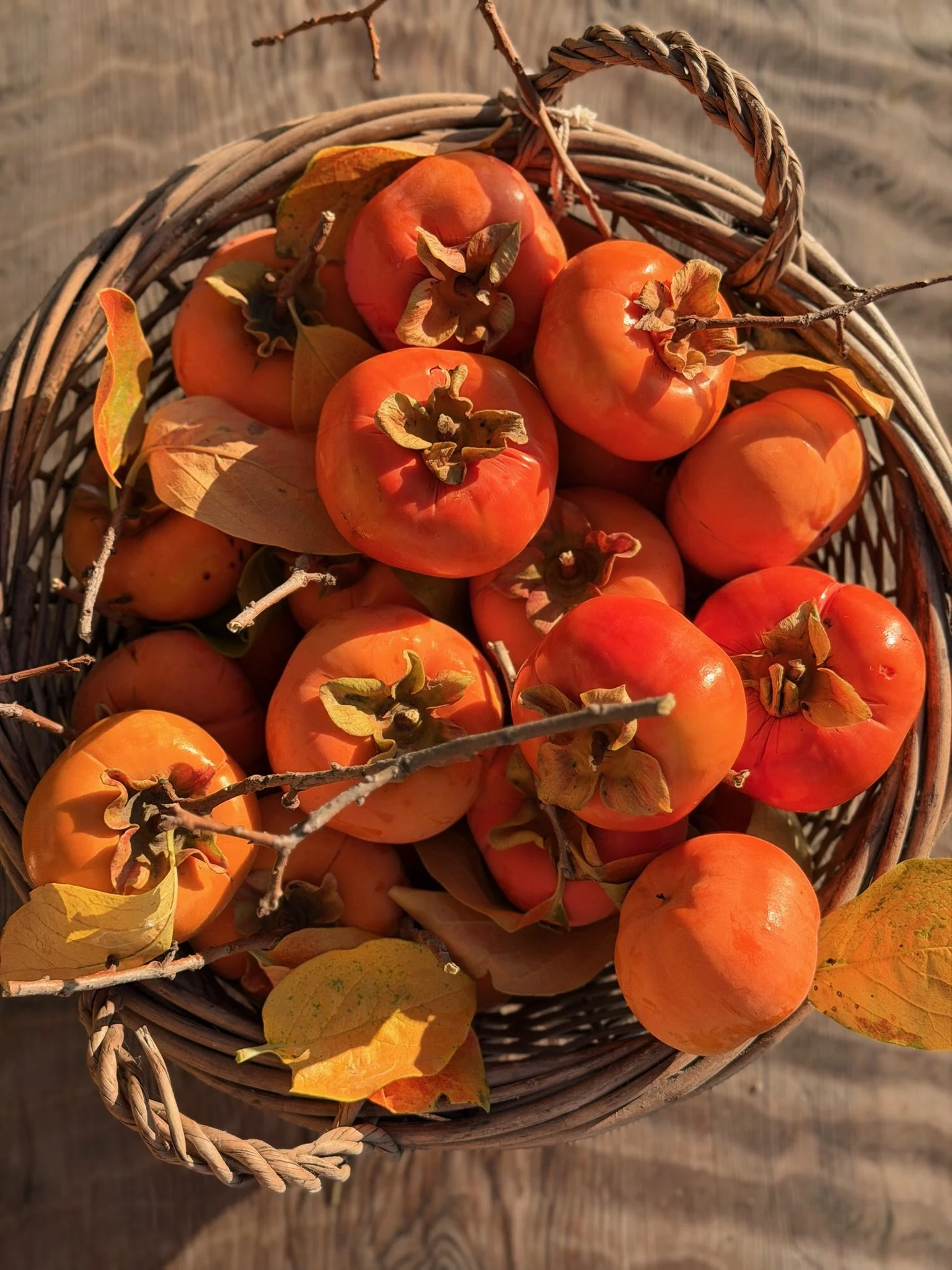
Because the weather was so nice on Thanksgiving, it was the perfect time to harvest persimmons from our fruit trees. Vanessa and Bea trekked down to the garden, ladder, basket and fruit picker in hand, and came back with enough to last us into the new year. With a season that lasts from September through December, the ridge is home to both hachiya and fuyu persimmons, both gorgeous to look at, irresistible to eat when gently picked off the trees, and a joy to add to baked goods, desserts and jams.
If you’re like Alison (who grew up on the east coast), you might be wondering what makes these orange orbs–also known as the “fruit of the Gods” to the ancient Greeks–so special. While most of the world’s persimmons are harvested in China, California produces 99 percent of U.S. crops. You can try to grow your own if you’re lucky enough to live in the right climate: Florida and Texas are also great places to try, thanks to ample sun and favorable weather. Otherwise, you’ll have to look a little harder to spot them at the store. They aren’t easy to find if you live in Brooklyn, and many shops only carry the fuyu variety (which are great for eating plain and with salads, but not so ideal for baking!)
The skin of persimmons is like that of a tomato: Hachiyas are soft and scoopable; Fuyus are hard and sliceable. Though they look intimidating to eat, you can bite fuyus like an apple if you prefer to eat them raw. Hachiyas are a drippy, delicious feast, best enjoyed when the pulp is scooped out with a spoon and added to smoothies or poured on top of yogurt. And the taste is like honeyed apricot or slightly tart, sort of like a Granny Smith apple. Beware though, if you eat them before they are squishy and soft, they can have lots of tannins that make your mouth pucker.
Though they’re lots of fun in the kitchen, the health benefits of persimmons are reason enough to reach for them instead of your usual fruits. The antioxidants fight inflammation and vitamins A, C and E are great for eye, skin and immune function. Best of all, the fiber in persimmons can help reduce LDL cholesterol and regulate blood sugar–great if your holiday diet is usually rich in chocolate and cheese.
We can’t wait to add these to breads and put them on desserts, and eat them in the winter sun. We also love dehydrating them so we can continue to enjoy their incredible flavor well after the trees are empty.