

Culinary Update: Fish Schooling
It’s hard to believe that it’s been a couple months since our last food post! Vanessa has been busy with nursing classes, while I’ve been fully immersed in the culinary arts program at the Institute of Culinary Education’s New York campus. From stock making and meat fabrication (which basically means preparing to cook by cutting, trimming, deboning, etc.) to grainy salads, decadent crepes, and rich croque madames, the past couple months have been a crash course in kitchen skills and culinary artistry.
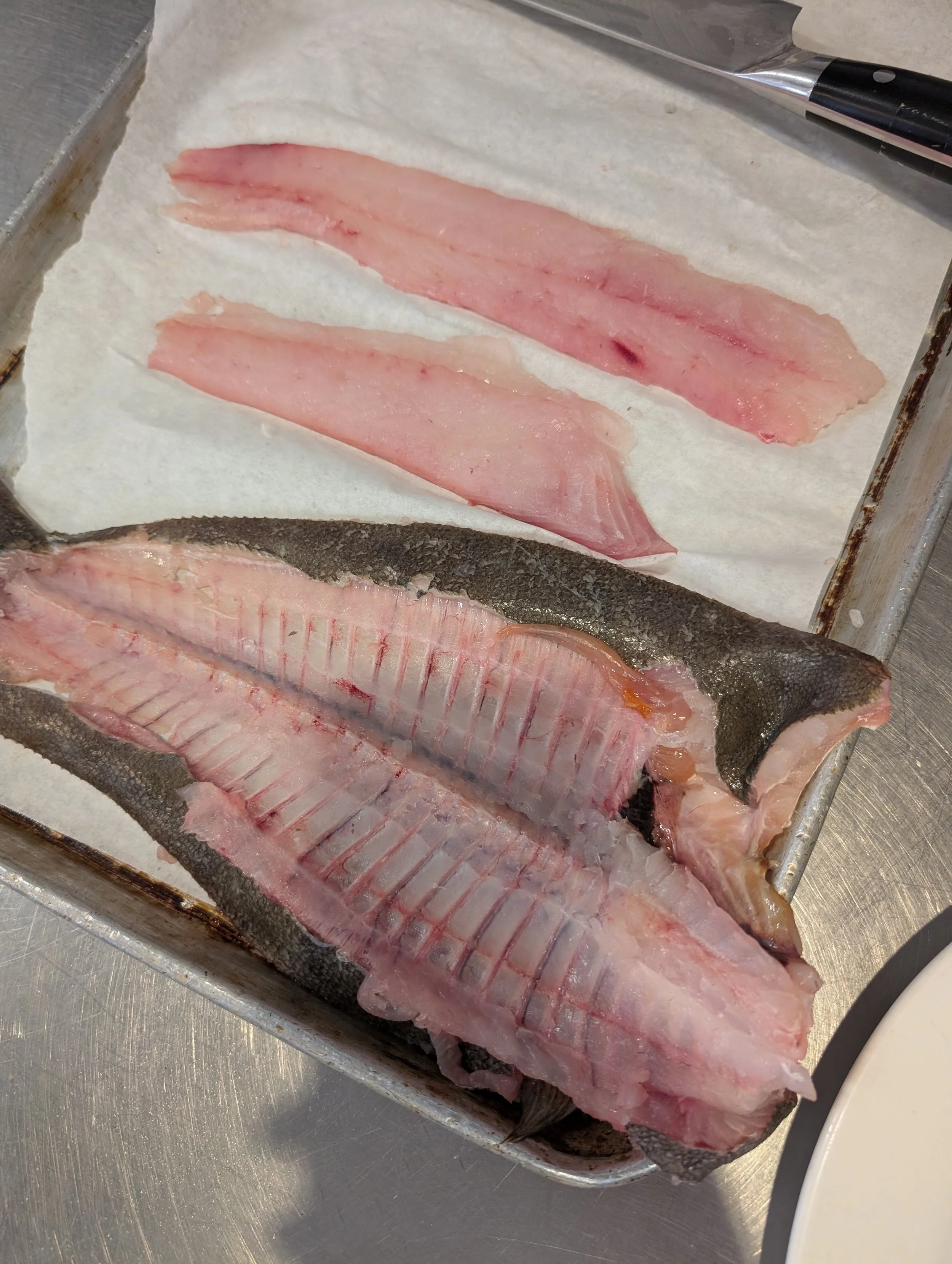
Alison’s flounder fillet (which she’s super proud of!)
I had been looking forward to the dessert portion (which has started and is *heaven* - more highlights from that to come), but a savory highlight so far has been fish fabrication. I tend to enjoy cooking meals with red meat, pork, game birds and fowl as the entree…only because I’m not very confident at cooking fish!
In the past few weeks, I’ve beheaded and filleted my first flounder, humanely slaughtered a lobster for a homemade lobster roll, shucked my first oyster, filled cream puffs and eclairs, and debearded mussels. While I’m nowhere near an expert, I’m proud of myself for getting over my squeamishness of handling raw fish, and for knowing how to create the filets I see in stores.
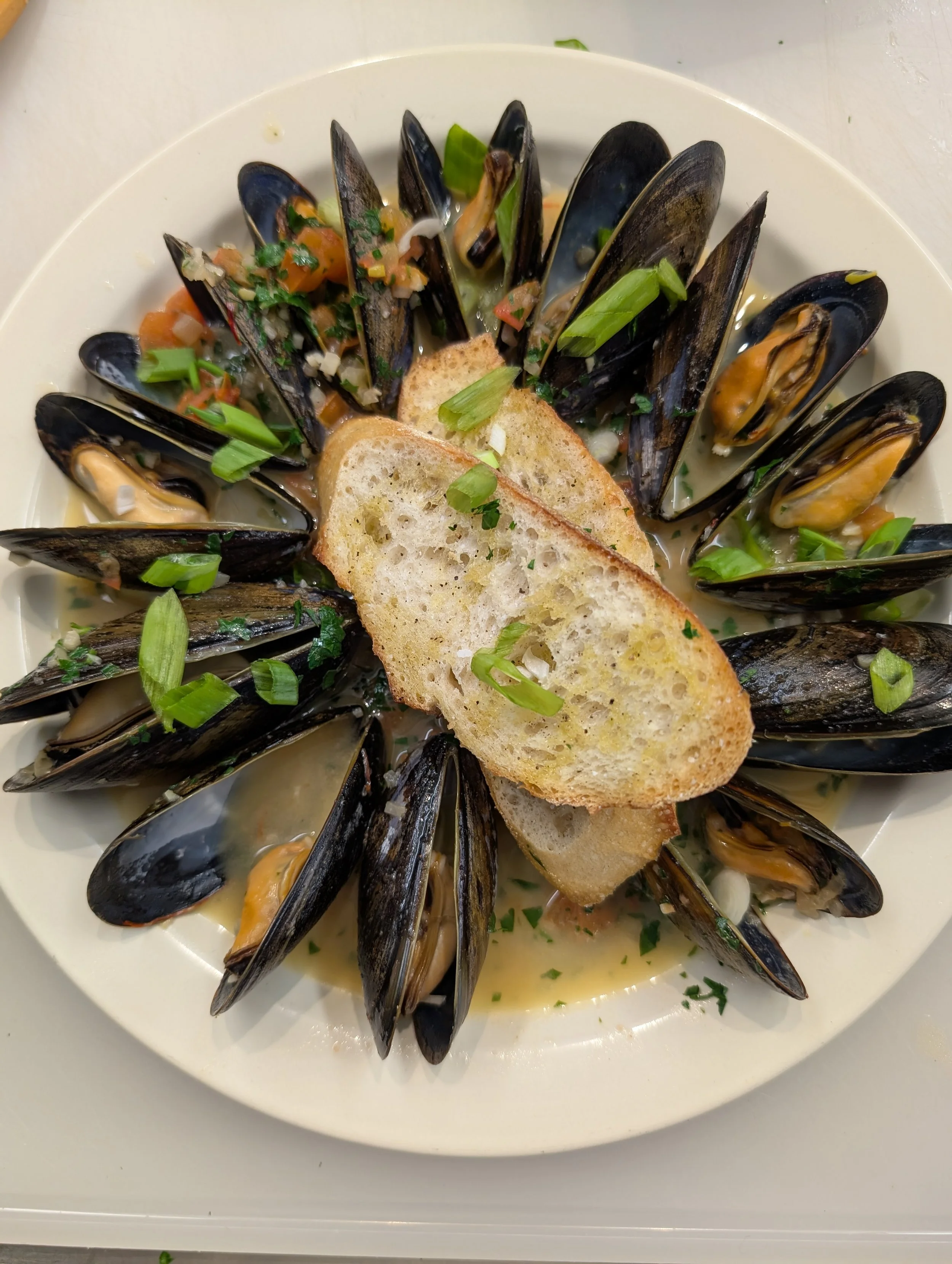
Mussels with Saffron and Tomato - just one of the many ways this recipe can be made!
I tend to prefer shellfish, so it’s no surprise that my favorite dish from this section was mussels with saffron and tomato. I love the ritual involved in splitting open mussels and mopping up the sauce with a fresh baguette, and the versatility of the broth. It can be made with beer, curry, or whatever flavor you’re interested in.
In the wild, mussels grow in clusters attached to rocks in the ocean. They’re held together and to surfaces with black hairy fibers, known as their beard. Be sure to rip this off with your fingers or a knife before cooking your batch, which you should always get from a reputable fishmonger or grocery store in your area. Harvesting mussels from the ocean and eating seems romantic, but they contain parasites and viruses (as well as a ton of sand). Not very appetizing!
Sort through your mussels and throw away any that are partially open before cooking. A shell that isn’t tightly closed means that the mussel is dead, and a fishy smell means you’ve got a bad batch. After you’ve done that, whipping up a batch will make you feel like you’re at a fancy Belgian restaurant – for a fraction of the cost.
MUSSELS with SAFFRON and TOMATO
serves: 1
½ ounce shallot, minced
1 small clove garlic, minced
A pinch of saffron
½ ounce butter
1 fluid ounce white wine
3 fluid ounces shellfish or fish stock
One pound of mussels
½ tomato seeded and small diced
¼ ounce parsley, picked, washed and finely chopped
1 teaspoon lemon juice
½ ounce cold butter
1 scallion, sliced thinly on a bias
Fresh baguette (we didn’t toast ours)
1. Sauté the shallots, garlic, and saffron in butter until shallots are translucent.
2. Add the wine and fish stock. Bring to a simmer.
3. Add the mussels and tomatoes. Cover and steam until the shells open.
4. When the shells open, remove them from the pan and place into a serving bowl.
5. Reduce the cooking liquid by one-third. Add the parsley, lemon juice and butter. Adjust the seasoning.
6. Pour the cooking liquid over the mussels. Add the sliced scallions.
7. Serve the baguette with the plated mussels.
Recipe courtesy of Institute of Culinary Education
